Pacific 231
Mikhail Tsekanusky, 1931
The text and the video excerpt below document Philippe Langlois’s book, Les cloches d’Atlantis, Musique électroacoustique et cinéma, Archéologie et histoire d’un art sonore, éditions mf, Paris, 2012.

A large part of the musical creation of the 1920s bears the stamp of the industrial era, including among composers who deny belonging in any way to the Futurist movement. This is the case of Arthur Honegger through the work Pacific 231 taken from the film La roue (1923) by Abel Gance. As early as 1913, Claude Debussy was already expressing the need for a new music, declaring: “Is it not our duty to find the symphonic formula that our age demands, the one called for by modern progress, daring and victories? The century of aeroplanes has a right to its music.”
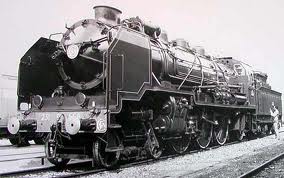
The title of this symphonic poem, a veritable programme music, comes from the famous steam locomotive the Pacific 231. This piece attempts a musical representation of a journey aboard this famous machine and draws its inspiration from the various noises of the locomotive through the instruments of the symphony orchestra: the screeching of scrap metal and the leaks of steam rendered by glissandi in the violins, the heaviness of the train at start-up and the movement of the connecting rods represented by the brass in the low register, the repetition of melodic-rhythmic motifs inspired by the perpetual motion of the machine… The different speeds of the train are also represented by the variable tempo in distinct sequences modelled on film shots. Honegger simulates the rotation and the acceleration of the train by means of diminishing rhythmic values that break down its movement: quavers, triplets, semiquavers, then the deceleration of the train on an opposite model.
Besides Jean Mitry’s film version of 1951, there is another, very little-known version, made by the Russian filmmaker Mikhail Tsekanuski in 1931, brought to light thanks to the work of Valérie Pozner, a researcher at the CNRS, in the holdings of the Krasnogorsk film archive. It is this version that is offered here, in a wholly unpublished form.