L’Ange
Patrick Bokanowski, 1984
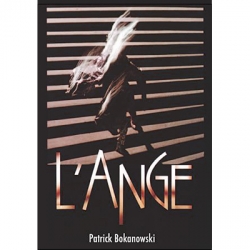
The staging of innocuous, primordial gestures of life is present in Patrick Bokanowski’s first three films, La femme qui se poudre (1972), Le déjeuner du matin (1979), and finds its fulfilment in L’ange (1984), accompanied by that repetitive obsession which also characterises Michèle Bokanowski’s music. With repeated sheet-metal scrapings, played with a bow and transformed in La femme qui se poudre, and fragments of a string quartet reworked and looped in L’ange, Michèle Bokanowski sets out to genuinely extend the intrinsic structure of the image. At every level, transformation is raised to a founding principle. With the Bokanowski couple, cinema becomes the art of fabricating an entirely subjective world of the imagination.
Michèle Bokanowski builds her vocabulary on the same basis as the images: reworked concrete elements (sound objects or instruments), looping, phase-shifting and multiplication creating a tension and a paroxysm before entering a new sequence.
If Patrick Bokanowski is passionate about everyday gestures, what motivates Michèle Bokanowski is rather what happens inside the characters while they perform these gestures. She thus manages to materialise the impossible state of tension to which the characters are subjected, prisoners of their gestures and of the stifling universe that surrounds them.
Most of the time, the music creates a distance from the image, except at certain moments when very marked synchronisms appear fleetingly, like something that falls brutally onto the image and that one does not expect, creating a total surprise that reinforces this deviant temporality which belongs only to the instant.