Impressions des Andes
Vic Towas, 1961
The text and video excerpt below document the book by Philippe Langlois, Les cloches d’Atlantis, musique électroacoustique et cinéma archéologie et histoire d’un art sonore, éditions mf, Paris, first quarter 2012.
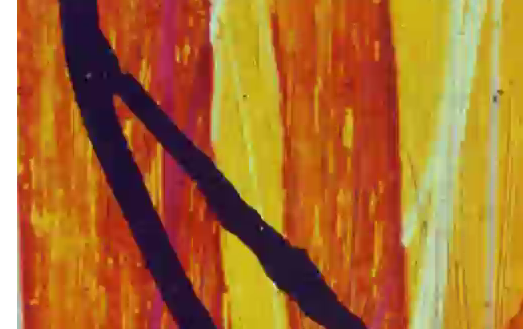
Impressions des Andes is an abstract experimental animated film composed of non-figurative images that scroll across the screen, drawing its inspiration from the motifs and graphic signs of the ancient Inca civilisation.
This unreleased film, which was probably never programmed on television – no broadcast date appears in the Catalogue du Service de la Recherche – explores the visual technique of “direct film” invented in England by the New Zealand filmmaker Len Lye in the early 1930s, consisting in making a film without the help of a camera, by painting directly on a transparent 16mm film stock, or by scratching a black film stock on which different colours had previously been painted, with the help of all sorts of utensils, brushes, combs, surgical instruments, in order to create forms and textures. Impressions des Andes then seems to pay direct homage to the master of “Direct Film” and to the two films by Len Lye that inaugurate these techniques: Color Box (1935) and Free Radical (1936).
To the rapidity of Vic Towas’s images and the velocity of the motifs that run across the screen, Edgardo Canton opts for a contrasting musical response, composing a richly noisy musical texture that evolves slowly throughout the film.
This information notice was co-produced with INA/GRM for the creation of the multimedia fresco – Artsonores – L’aventure électroacoustique, in the category Films produced by the Service de la Recherche de l’ORTF from 1950 to 1975.