Dans ce jardin atroce
Jacques Brissot, 1964
The text and video excerpt below document the book by Philippe Langlois, Les cloches d’Atlantis, Musique électroacoustique et cinéma, Archéologie et histoire d’un art sonore, éditions mf, Paris, 2012.
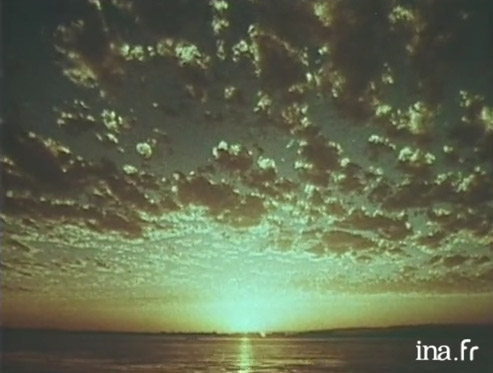
Dans ce jardin atroce is the first episode of a television essay project presented in the form of a trilogy of about one hour, made over several years, which also includes the documentary films Présent du fleuve (1959), set in 400 BC, a sort of imaginary documentary after the stories of Herodotus, and Egypte Ô Egypte (1962), the last film of the series and generic title of the whole, which returns to the mythology of death. For Dans ce Jardin atroce, Jean Cocteau is both the narrator and the author of the text taken from Malesh, over images of Egypt.
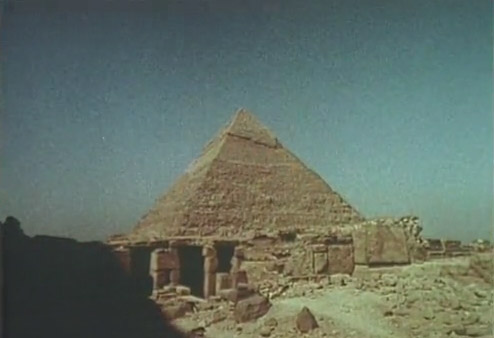
All three parts have music by Luc Ferrari. This film is conceived as a wandering through the Valley of Thebes and the temple of Karnak. – “To read the temples of Egypt like a history book is absurd,” says Jean Cocteau. Jacques Brissot thus offers us a sort of contemplative journey through the chaos of the ruins, the remains of a gigantic termite mound that make up a veritable chessboard of sand of cosmic dimension. – Ruins hiring statues, statues disfigured by lightning that return to sand, frescoes, porticoes, obelisks, disconcerting rebuses of hieroglyphs, vistas of ram-headed Sphinxes, pyramids that are “the magnet of heaven for earth and of earth for heaven”, confront us with a deadly and frightening silence.
Loading this video takes a little time…
This information notice was co-produced with INA/GRM for the creation of the multimedia fresco – Artsonores – L’aventure électroacoustique, in the category Films produced by the Service de la Recherche de l’ORTF from 1950 to 1975.