Ciné-crime
Maurice Blackburn, 1968
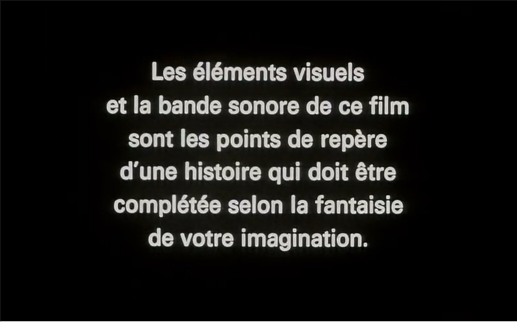
In 1968, Maurice Blackburn produced and directed his own film Ciné-crime, the credits of which state that “the visual elements and the soundtrack of this film are the landmarks of a story that must be completed according to the whims of your imagination”.
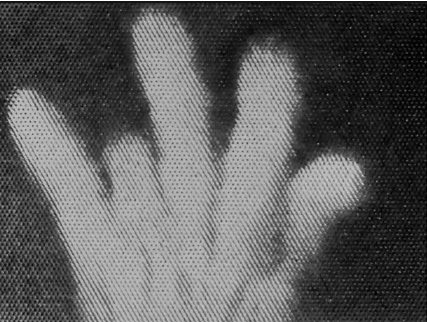
The black-and-white image, through a play of shadows and lights, is more suggestive than figurative. Fragments of gestures lead us to imagine a thief pursued by the police, caught, tried, thrown into prison, then preparing his escape. The soundtrack guides the viewer through the narrative more than the images themselves, deliberately obscured by stylised blur effects. It highlights Maurice Blackburn’s electroacoustic approach to the film score, in which all sounds – speech, sound effects and the music itself alike – are considered as sound objects.
This soundtrack therefore no longer has merely the function of sound reinforcement; it is no longer applied like a varnish on a finished visual that already has all its meaning, but acquires an active role and enriches the film through its own expressive means.
A veritable cinema for the ear, the music of Ciné-crime demonstrates the conception of an active soundtrack set against a deliberately blurred image. Sound manipulations are, for our perception, a far more obvious reality than what we are given to see.
Ciné-crime by Maurice Blackburn, National Film Board of Canada