Symphony of Sirens
Arseny Avraamov, 1922
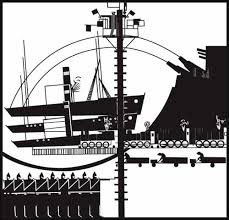
In the early 1920s in Russia, Arseny Avraamov is probably the Russian composer who most emblematically represents a musical trajectory, still largely overlooked today, that follows the most experimental strand of Bruitist music in the wake of Russian Futurism.

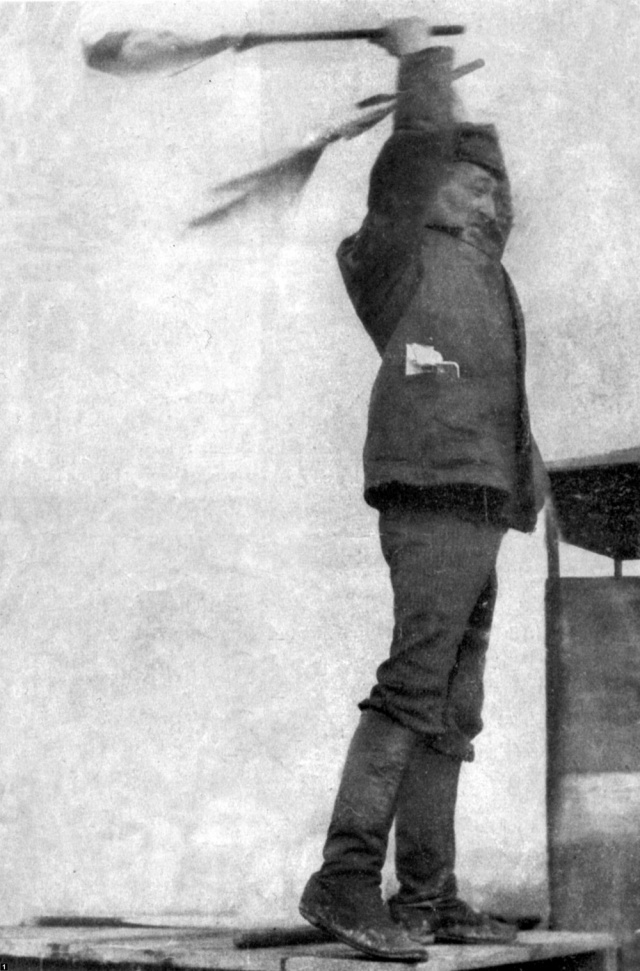
In 1922, to celebrate the anniversary of the Revolution, he conceived a great city symphony that would be played in Baku not by traditional instruments but by sounds emanating from the entire city: artillery and cannon fire, factory sirens, steam whistles and battleship horns became, under his baton, or rather under his flags, since he conducted with flags himself from the top of a platform or from the rooftops, one of the most striking city symphonies in the history of music.
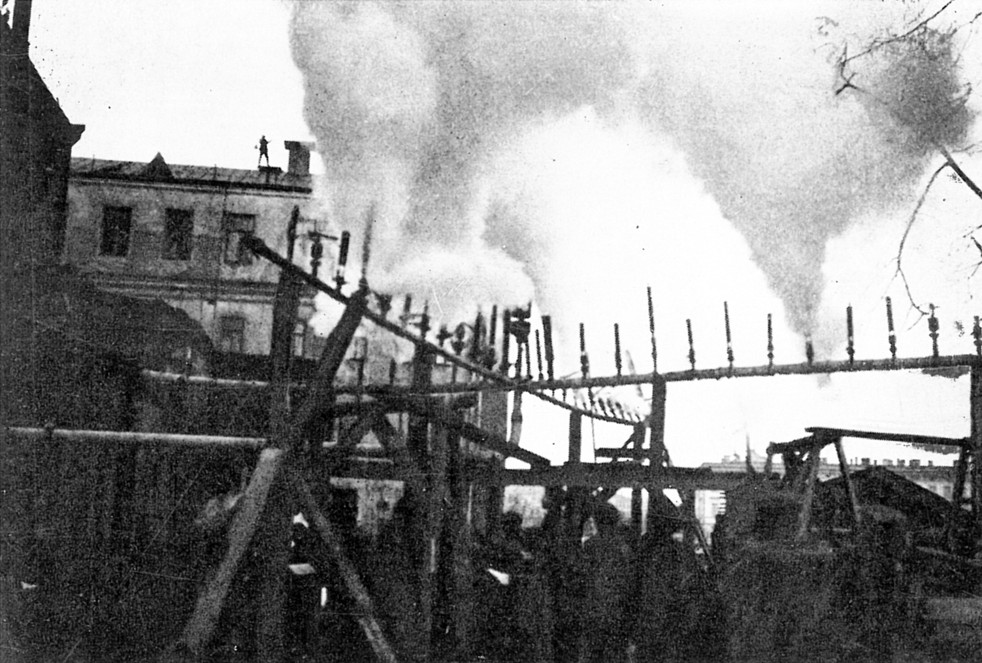
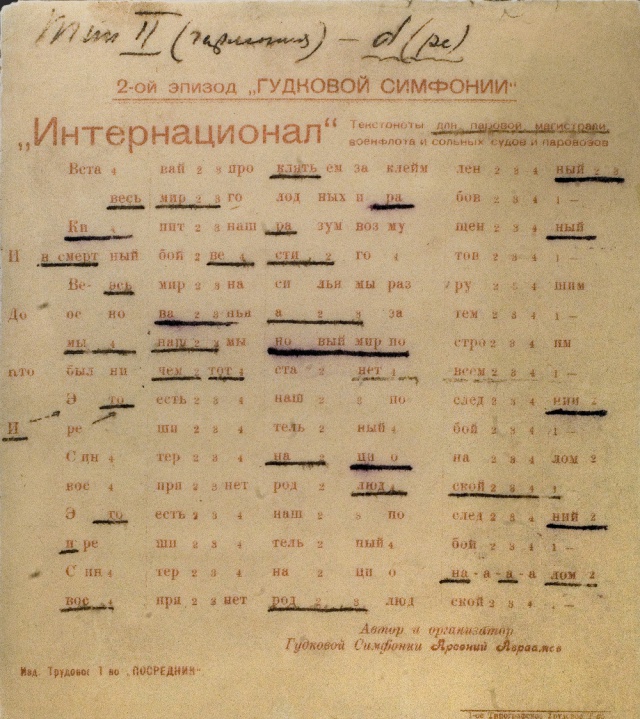
For this symphony on the scale of the entire city, he devised a complete system of steam whistles, covering the whole chromatic scale over more than an octave and a half, which allowed him to include in his city symphony melodies played by these steam machines, such as L’Internationale or La Marseillaise.
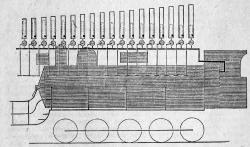
Avraamov would later attempt to simplify this system with a device distributing the steam through different whistles, notably for the revival of the Symphony of Sirens in Nivni Novgorod and then in Moscow in 1923.
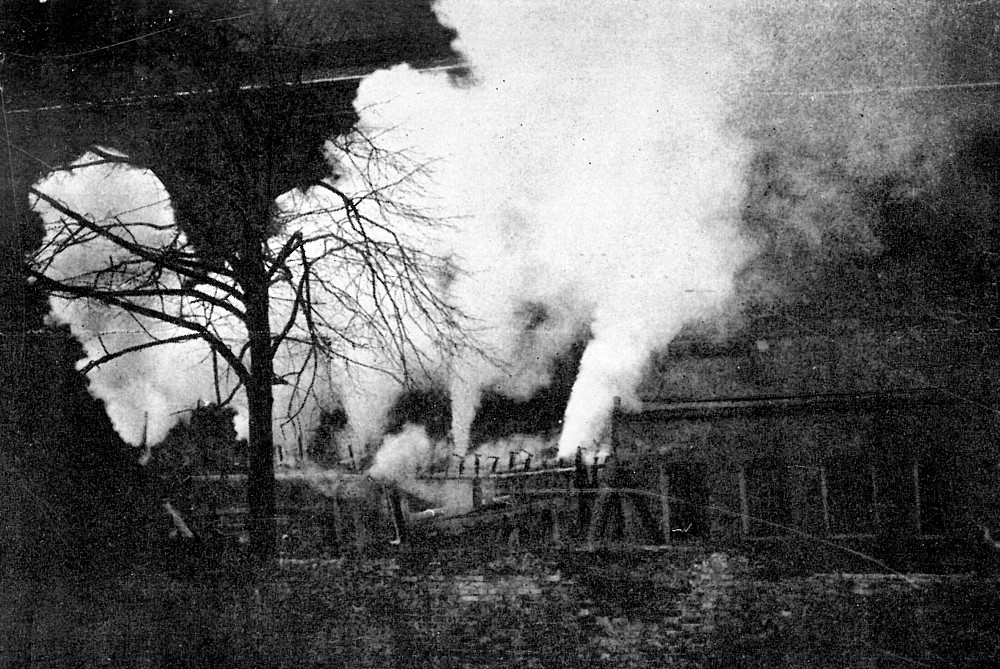
Edgard Varèse had admittedly already introduced the siren into the midst of his orchestra, notably in Amériques (1918-1921), then in Hyperprism (1923) and Ionisation (1933), and it is also found in the film Ballet Mécanique (1924) by Fernand Léger and Dudley Murphy, under the musical direction of George Antheil, but with this example, in a still more radical gesture, Avraamov integrates this play of sirens and whistles into his unheard-of orchestra, in which he extends every section to the entire city.
He composed a score in which he integrated all these sound instruments.
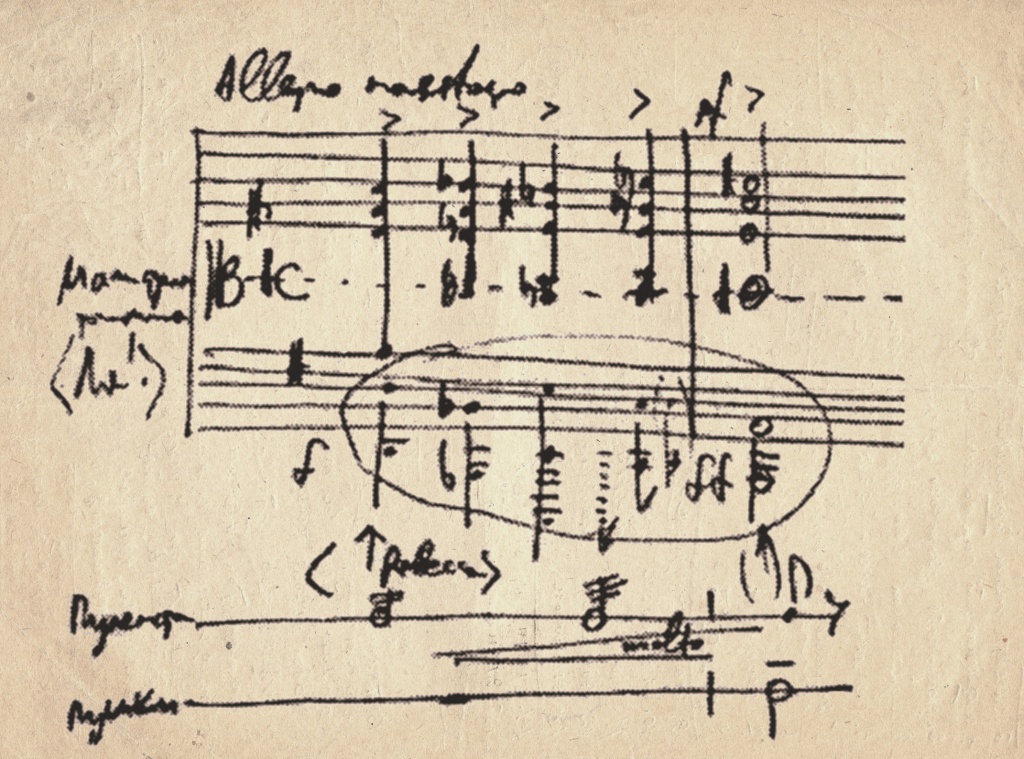
For the more diffuse and distant sound events, Avraamov specified the triggering of sound events according to a very precise timeline, which each person in charge of a sound event had to obey.
Here is a sound reconstruction by Leopoldo Amigo and Miguel Molina, released in 2008 in the indispensable box set Baku Symphony of Sirens, which brings together a sound reconstruction and period archives of the Russian avant-garde.
The first cannon shot from the roadstead (in about 12 o’clock) cues the alarm horns of Zych, White City, Bibi-Heybat and Bailov plants.
The fifth cannon shot cues the industrial horns of Product Management Azneft and docks.
The tenth cues the second and the third groups of Chernogorodsky district.
The 15th cues the first group of Black town and the sirens of the fleet. At the same time the fourth company of the Armavir courses of red commanders and the brass orchestra playing Warshavyanka go to the pier.
The 18th cannon shot cues the plants of Gorrayon and the seaplanes take off.
The 20th cues the horns of the railway depot and the locomotives, that remain at the stations. Machine guns, infantry and steam orchestra, entering at the same time, get cues directly from the conducting tower.
During the last 5 cannon shots alarm gets to the maximum and terminates with the 25th shot. Pause. Recall (signal from the Magistral).
Triple chord of the sirens. Seaplanes descend. “Hurrah” from the pier. Cue from the Magistral. “L' Internationale” (4 times). With the second half strophe the brass orchestra starts playing “La Marseillaise”. With the first repeat of “L' Internationale” melody the whole square starts to sing all three strophes of “L' Internationale” to the end. At the end of the last strophe the Armavir companies with orchestras return, met by “hurrah” calls from the square. During the performance of “L'Internationale” all the industrial horns and the railway station (depot and locomotives) remain silent.
Right after a joint triumphant chord, accompanied by cannon shots and bell-ringing, is played for 3 minutes.
Ceremonial March. «L' Internationale” is repeated two more times at cues during the final procession. After the third (final) performance the sirens cue one more joint chord of all the horns of Baku and its districts.
Arseny Avraamov
“Horn” magazine, 1923
Find more information on the Monoscop website, which gathers a great deal of information on Arseny Avraamov.